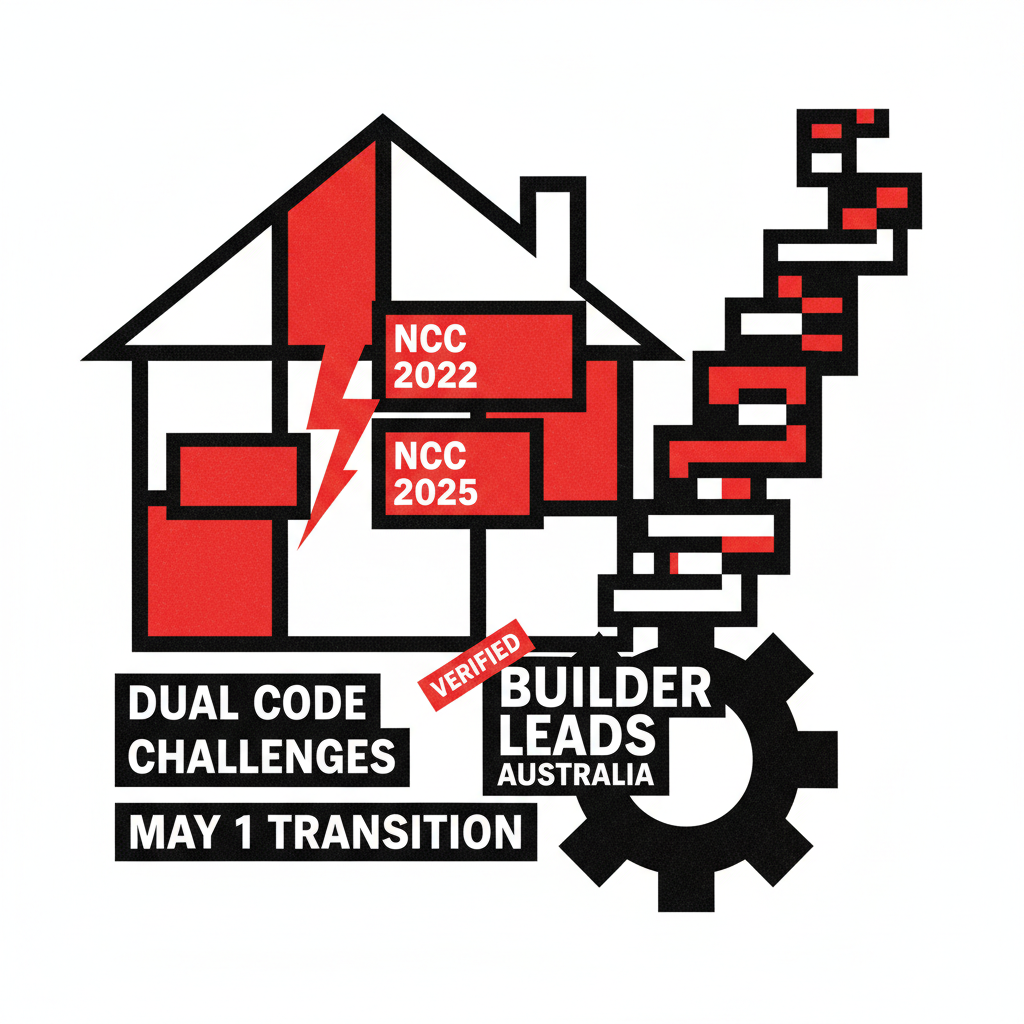
TL;DR: Builders across Australia are now navigating a complex dual-code environment as states begin the staggered adoption of NCC 2025, starting from May 1, 2026. This means projects could fall under either the new 2025 standards or the previous 2022 codes, depending on approval dates and location. This adds significant challenges for design, approvals, and material sourcing.
Key Takeaways
- May 1, 2026 kicked off the NCC 2025 transition period for several states, creating a dual-code environment.
- NCC 2025 brings big changes, mainly focused on 7-star energy efficiency ratings and mandatory Livable Housing Design (Silver Level) standards.
- Adoption dates vary a lot across states and territories. You’ll need to stay updated on specific regional timelines and grace periods.
- Builders face dual code building challenges that can impact project designs, material procurement, and regulatory approvals.
- Proactive planning, staff training, and using industry resources are crucial for ensuring NCC 2025 compliance for builders.
- The impact of NCC 2025 on builders will mean more complexity, but also chances to deliver more sustainable and accessible homes.
Australia’s building industry hit a new phase on May 1, 2026, when the National Construction Code (NCC) 2025 started its staggered adoption across states and territories. This isn’t just a simple update; it’s ushering in a dual-code building challenges environment. Projects could be assessed under either the old NCC 2022 or the new NCC 2025, depending on when and where they’re approved. For builders, this means staying sharper than ever on compliance.
What is the NCC 2025 transition period?
The NCC 2025 transition period is the timeframe when Australian states and territories adopt the new National Construction Code. This period kicked off on May 1, 2026, giving jurisdictions a chance to integrate the updated regulations into their local frameworks. It also gives builders and certifiers time to adapt. NCC 2025 is Australia’s latest edition of uniform technical building standards, covering everything from structural integrity to energy efficiency.
The key changes in NCC 2025 primarily target residential buildings. These include new minimum 7-star energy efficiency ratings and mandatory Livable Housing Design (LHD) Silver Level features. It also extends the lead-free plumbing requirements nationally. You need to understand these changes to avoid costly reworks and delays.
How do NCC 2025 adoption dates Australia impact your projects?
The NCC 2025 adoption dates across Australia aren’t uniform; they vary by state and territory. This creates a complex compliance landscape. Some states, like NSW and Victoria, have moved quickly to implement certain aspects, while others might have longer transition periods or specific start dates. This staggered approach means you could be working on projects under NCC 2022 in one region, but another project just over the border requires NCC 2025 compliance.
This regional variation brings significant dual code building challenges. For instance, a home designed in early 2026 and approved before May 1st might proceed under NCC 2022 rules. However, a similar project submitted for approval just days later could fall under NCC 2025 requirements. This split impacts your design specifications, material procurement, and subcontractor choices. Keep a close eye on your local Building Commission or Fair Trading websites for exact dates and any specific grace periods.
Navigating these varied requirements is crucial, especially if your business operates across different regions. CrocLeads can help you manage your pipeline by location. We cover 8 capital cities and 750+ suburbs, letting you filter for homeowner leads specifically in areas where you’re fully compliant with the current codes. Don’t waste time on leads outside your operational scope; focus on building where you’re ready to go.
What are the main dual code building challenges for builders?
The main dual code building challenges for builders revolve around managing two sets of regulations at the same time. Your teams – from designers and estimators to site supervisors and trades – need to be fully aware of which code applies to each project. Errors can lead to costly redesigns, material waste, and significant project delays.
One big challenge is the potential for increased material costs and availability issues, especially for higher-rated insulation or specific plumbing fittings that NCC 2025 requires. You might also face longer approval times as certifiers get used to the new standards and interpret tricky clauses. Incorrectly specifying materials or designs could result in project rejections and further financial strain. Master Builders Australia (MBA) has pointed out these issues, urging state authorities to communicate clearly.
While you’re dealing with these complexities, lead generation shouldn’t add to your stress. CrocLeads delivers verified homeowner leads directly to your self-service dashboard. This frees you up to focus on site management and NCC 2025 compliance. You can browse, filter, and purchase leads anytime, ensuring your pipeline stays healthy without unnecessary overhead.
How can builders ensure NCC 2025 compliance for builders?
Ensuring NCC 2025 compliance requires a proactive and strategic approach. First, invest in comprehensive training for your staff on the new energy efficiency, livable housing, and lead-free plumbing requirements. Talk to your building certifiers early to understand their interpretation of the new codes and any specific documentation they’ll require. Review your standard designs and specifications now, identifying areas that need updating to meet NCC 2025.
Second, use industry resources. Organisations like the Housing Industry Association (HIA) and Master Builders Australia offer excellent training programs, guides, and state-specific updates. For example, the Victorian Building Authority (VBA) and Queensland Building and Construction Commission (QBCC) provide detailed information on local adoption. Stay in constant communication with your suppliers and subcontractors to ensure they can source and install compliant materials.
Even with the demanding focus on NCC 2025, the market for new homes remains strong. Don’t let compliance hurdles slow down your business growth. CrocLeads helps you keep your pipeline full with exclusive or shared leads. You can choose what works best for your business model and current capacity. You pay per lead, with no contracts, no retainers, and no monthly fees, allowing you to adapt your lead spend as your compliance strategies evolve. Get instant notifications with our WhatsApp Alerts when new, matching leads become available in your service areas.
NCC 2025 Key Changes Comparison
The shift to NCC 2025 brings measurable changes for residential construction. Here’s a quick overview of some of the significant updates compared to NCC 2022.
| Feature | NCC 2022 Requirement | NCC 2025 Requirement | Estimated Impact on Build Costs (AUD) | | :--------------------------- | :------------------------------------------------------ | :------------------------------------------------------------ | :